What is the process of corporate video production?

Corporate video is no longer a secondary communication tool reserved for annual meetings or website introductions. It has become central to how organisations present their identity and communicate their vision also attract talent. A thoughtfully produced corporate film carries authority. It reflects how seriously a company approaches its message and its audience also its own brand standards.
However, producing a corporate video involves far more than arranging interviews and capturing office footage. It is a structured and collaborative process that blends strategic thinking with creative execution.
This guide walks through each stage of corporate video production, explaining how it unfolds and why every step plays a vital role in delivering a refined and impactful result.
Why Is a Structured Corporate Video Production Process Important?
Without structure, even the most promising corporate video idea can lose direction. Miscommunication and unclear objectives also inconsistent feedback often lead to delays and unnecessary revisions. A structured process ensures that creative decisions are aligned with business goals from the outset.
A clear and organised workflow helps to:
- Align the video with well-defined organisational objectives
- Maintain consistency in tone, messaging, and brand positioning
- Facilitate transparent communication between teams
- Reduce last-minute changes and production inefficiencies
- Keep timelines and budgets under control
- Uphold professional quality standards throughout the project
Corporate videos often serve as a brand’s visual representation to clients, partners, and employees. A structured approach safeguards that representation by ensuring every stage contributes meaningfully to the final output.
What Are the Key Stages in the Corporate Video Production Process?
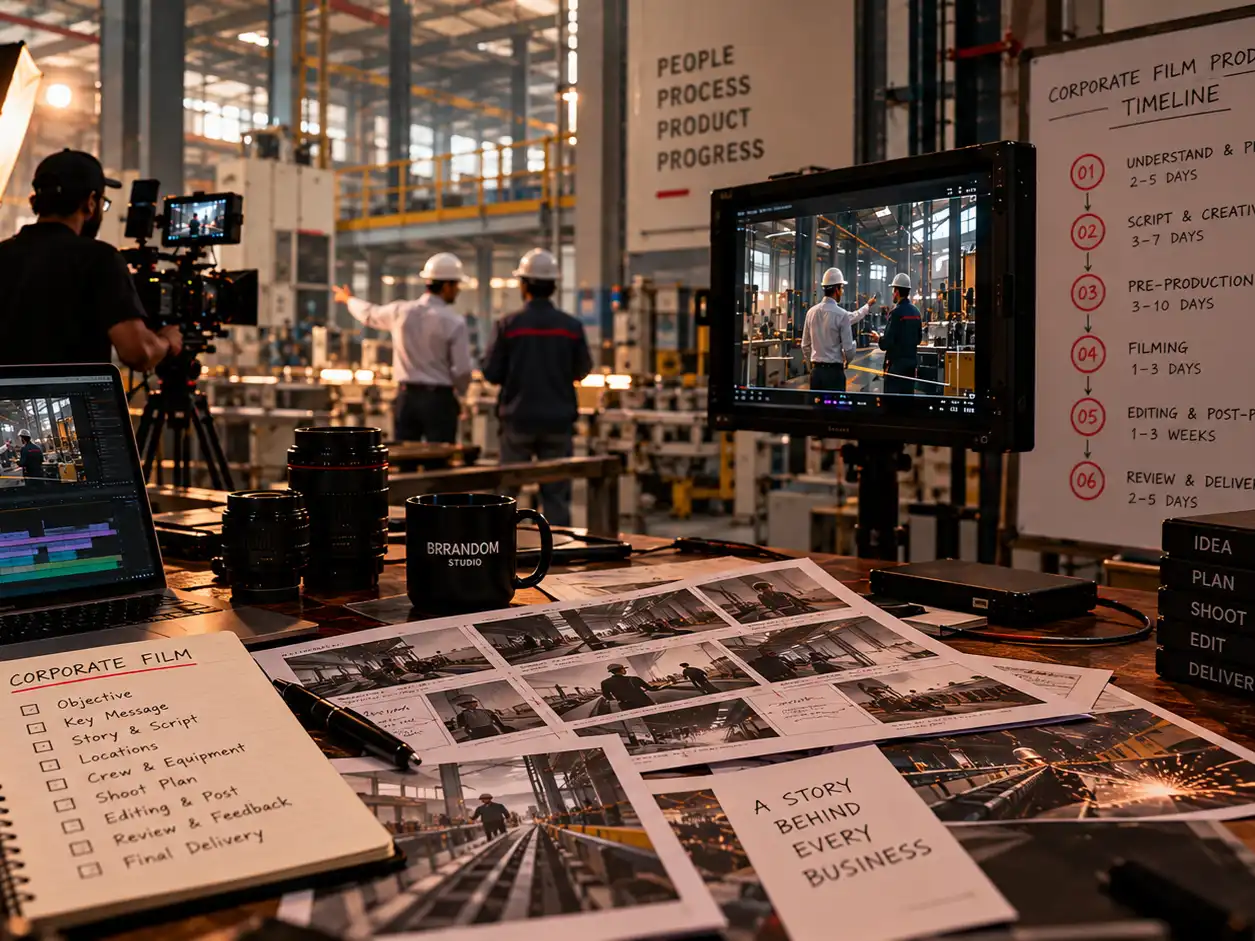
Corporate video production unfolds through carefully sequenced stages. Each phase builds upon the previous one, ensuring that creativity and strategy work together seamlessly.
-
Step 1 – Discovery and Briefing
The process begins with in-depth conversations. The production team works closely with stakeholders to understand the organisation’s objectives and audience profile with key messaging, and intended outcomes. This is where strategic alignment takes shape. A comprehensive briefing eliminates ambiguity and creates a shared understanding of expectations. This stage reduces uncertainty later and lays a strong foundation for creative development when it is handled thoughtfully.
-
Step 2 – Concept Development and Scriptwriting
Once objectives are clear, attention shifts to shaping the narrative. The creative team develops a concept that reflects the organisation’s values and communication goals. This includes defining the storyline and deciding how the message will unfold also determining the visual style. Scriptwriting translates these ideas into structured dialogue and interview prompts also voiceover content. Clarity and authenticity are essential in corporate films. A carefully written script ensures that the video remains focused and engaging also aligned with its intended purpose.
-
Step 3 – Pre-Production Planning
Pre-production transforms ideas into action. This stage involves storyboarding
- location scouting
- scheduling shoot days
- organising equipment
- finalising logistics.
If talent or presenters are involved, casting is coordinated here. From lighting arrangements to on-site permissions every practical detail is planned in advance. Thorough preparation minimises disruptions during filming. It keeps the production phase efficient. Pre-production is often where potential challenges are anticipated and resolved. It also ensures smoother execution.
-
Step 4 – Production (Filming)
Production is the stage where the concept becomes tangible. Directors, cinematographers, lighting technicians, and sound engineers collaborate to capture interviews, workplace visuals, product shots, and supporting footage. Attention to framing, sound clarity, lighting balance, and performance quality ensures professional results. Even seemingly simple corporate shoots require coordination and precision. Efficient filming not only preserves creative integrity but also ensures that timelines and budgets remain manageable.
-
Step 5 – Post-Production and Editing
Post-production is where the story truly comes together. Editors review footage and refine pacing also shape the narrative into a cohesive film. This stage includes
- colour correction
- sound mixing
- music integration
- Subtitles
- Graphics
- final polishing.
Feedback loops are incorporated carefully. This is to ensure the video reflects stakeholder expectations while maintaining creative quality. Thoughtful editing enhances clarity and emotional impact. It transforms raw footage into a professional and engaging corporate video.
-
Step 6 – Final Delivery and Distribution
The video is exported in formats suited to its intended platforms after revisions are completed and approval is granted. This may include multiple aspect ratios or shorter versions for digital channels. Proper formatting ensures that the video performs effectively across websites and presentations even social media. Final delivery marks the completion of the production journey. But it also signals the beginning of the video’s role in audience engagement.
Key Elements That Influence Corporate Video Production
Corporate video production is shaped by both creative direction and operational efficiency. The quality of the final output depends on how well these elements are aligned and managed throughout the process.
Critical influencing factors include:
- Clearly defined objectives that guide creative decisions
- A strong understanding of the intended audience
- Effective storytelling that balances information and engagement
- Skilled professionals handling filming, sound, and editing
- High-quality technical equipment and resources
- Coordinated project management and stakeholder collaboration
- Consistent alignment with the brand’s visual and tonal identity
When these elements work together harmoniously, the resulting video communicates with confidence and clarity.
Conclusion
Corporate video production is a thoughtful, structured process that blends strategic planning with creative craftsmanship. From initial briefing and concept development through to filming and post-production refinement! Each phase contributes to a final output that represents the organisation with professionalism and clarity.
By understanding how the process unfolds and recognising the elements that influence quality, organisations can collaborate more effectively and achieve outcomes that enhance credibility, strengthen engagement, and support long-term communication goals. A well-executed corporate video is more than a communication tool—it is a strategic asset that reinforces trust and brand identity across platforms.
FAQs
The process begins with discovery and briefing to align objectives, audience, and expectations.
Most projects range from two to six weeks depending on scope and complexity.
It ensures that planning, coordination, and creative direction are clearly defined before filming begins.
Yes, professional production includes preparing optimised versions for websites, presentations, and digital channels.
Recent Blogs