
How AI Transforming Video Production
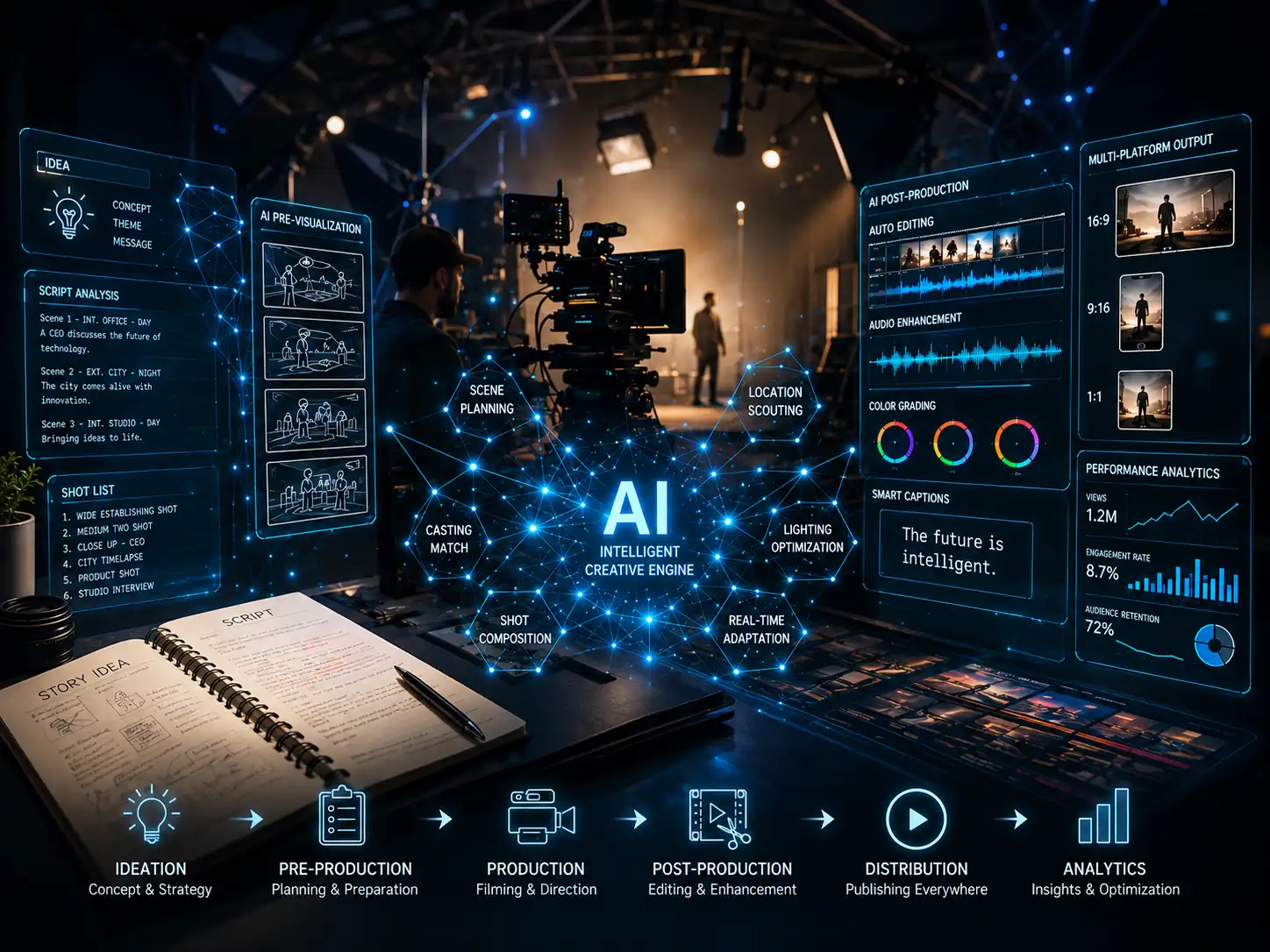
Video has firmly established itself as the most influential medium in modern communication. It continues to dominate digital consumption, shaping how audiences interact with brands across social media and other platforms. For businesses, this growing demand brings both opportunity and pressure. This is where AI video production is reshaping the industry. Artificial intelligence is no longer limited to isolated tools or experimental use cases. It is now embedded across the entire production ecosystem.
The shift is not about replacing creativity but about enhancing it. This article explores how AI is transforming the video production landscape, the tools driving this change, and what it means for brands moving forward.
How AI is Changing the Video Production Workflow
AI is not confined to one stage of production. It is influencing the entire workflow, bringing efficiency and clarity to each phase.
-
1. Pre-Production: Faster Ideation and Script Development
The pre-production phase sets the foundation for any video project, and AI is making this stage significantly more efficient. AI tools can generate relevant content ideas and structured scripts within a short time by analysing audience data, industry trends and previous campaign performance. With the help of AI tools for video production, creative teams can develop multiple concepts quickly, allowing for experimentation and refinement before production begins. This reduces the time spent on initial brainstorming while ensuring that ideas are aligned with audience expectations.
-
2. Production: Smarter Shooting and Real-Time Assistance
AI introduces a layer of precision that enhances both efficiency and consistency during filming. It can also provide real-time feedback, alerting teams to potential issues like poor lighting or audio imbalance. This immediate correction reduces the likelihood of reshoots and ensures that footage meets quality standards from the outset. As a result, production becomes more controlled and less dependent on manual adjustments.
-
3. Post-Production: Automated Editing and Enhancement
Post-production is often the most time-consuming stage. But AI has transformed how this process is managed. Automated editing tools can review raw footage, identify key moments and assemble initial cuts within minutes. Tasks like trimming clips, adding transitions, generating captions and balancing audio are handled efficiently through AI video editing service platforms. Colour grading and visual enhancements are also streamlined, ensuring a consistent look and feel across the final output. This level of automation significantly reduces editing timelines while maintaining professional standards.
-
4. Distribution: Platform Optimisation and Content Adaptation
AI plays an essential role in ensuring that video content performs effectively across different platforms. Each platform has unique requirements, and AI tools can automatically adapt videos into suitable formats. AI analyses audience behaviour to recommend optimal posting times and captions as well as meta data. This improves discoverability and engagement, allowing content to reach the right audience at the right moment.
-
5. Performance Analysis: Data-Driven Insights for Improvement
One of the most valuable aspects of AI in video production is its ability to provide detailed performance insights. AI-powered analytics tools track viewer engagement, watch time and interaction patterns, offering a clear understanding of how content is received. These insights enable continuous improvement. This iterative approach ensures that content evolves in line with audience preferences, leading to better engagement and stronger results over time.
What Are the Key Benefits of AI in Video Production?
The growing adoption of AI video production is driven by its ability to deliver both operational efficiency and creative enhancement. The advantages of integrating AI into video production extend across multiple areas:
- Improved efficiency: Automation reduces the time required for repetitive tasks, speeding up production cycles.
- Cost optimisation: Lower reliance on manual processes helps reduce overall production expenses.
- Scalability: Brands can produce more content without significantly increasing resources.
- Enhanced personalisation: AI enables tailored content that resonates with specific audience segments.
- Data-driven decision-making: Insights from analytics improve content effectiveness.
These benefits highlight why AI in video production is becoming an essential part of modern content strategies.
Conclusion
AI is redefining the video production landscape, bringing together efficiency, scalability and creative potential in new ways. From ideation and filming to editing and distribution, AI video production is transforming how content is created and delivered. The most effective approach lies in combining the strengths of both. As we move further into 2026, understanding how AI is used in video production will be critical for brands aiming to stay competitive. By embracing AI thoughtfully, organisations can produce high-quality content that is both efficient and impactful, ensuring meaningful engagement in an increasingly digital world.
FAQs
AI video production involves using artificial intelligence tools to automate and enhance various stages of video creation.
AI is used for scripting, editing, optimisation, distribution and performance analysis.
No. AI supports technical processes, but creative storytelling and strategy remain human-driven.
AI improves efficiency, reduces costs, enables scalability and provides data-driven insights for better performance.
Recent Blogs