How to Choose a Video Production Company in India (Without Wasting Your Budget)
India has thousands of video production companies – from one-person freelancers with a camera and a laptop, to full studios with in-house directors, writers, and editors. That range is exactly what makes hiring one so confusing. Two quotes for the “same” corporate film can differ by 5x, and the cheaper one isn’t always the worse choice – but it often is.
We’re Brrandom Studio, a Kolkata-based production studio, and we’ve sat on both sides of this conversation: pitching for work, and being called in to fix a project that went wrong with someone else first. Here’s what we’d tell a friend before they sign a contract.
Start by asking what you’re actually buying
A “video production company” can mean wildly different things:
- A freelancer or small crew – lower cost, but you’re often the de facto producer, chasing schedules and managing the creative yourself
- An agency – strong on strategy and client servicing, but production is frequently outsourced to third-party vendors you never meet
- A studio – an in-house team (writers, directors, cinematographers, editors) that owns the process end-to-end, from script to final delivery
None of these is universally “better” – a freelancer is fine for a simple testimonial video; a studio matters more when the story, consistency, and production value need to hold up under scrutiny (investor decks, brand campaigns, anything with your CEO’s face on it).
Six things to check before you sign anything
1. Ask to see full projects, not just showreels
A 90-second showreel hides a lot. Ask for two or three complete films, ideally in your industry or a similar one, and watch them start to finish. Pay attention to pacing in the middle – showreels only ever show you the best 3 seconds of a project.
2. Get a line-item quote, not a lump sum
If a quote is one number with no breakdown of pre-production, shoot days, crew, and post-production, you have no way to know what happens when scope shifts – and on almost every project, it shifts. A studio that itemises its pricing is a studio that’s thought through the actual work, not just the invoice.
3. Be suspicious of a quote that’s dramatically lower than everyone else’s
The cheapest quote rarely produces the cheapest outcome. A quote that undercuts the market by 50%+ is usually cutting one of three things: a dedicated director, adequate shoot days, or experienced crew day rates. Any of those three cuts shows up in the final film – reshoots cost more than doing it right the first time.
4. Ask who is actually on your crew
Get names and roles: who directs, who’s behind the camera, who edits. A studio that can answer this immediately, without checking with someone else, is a studio that runs projects in-house rather than subcontracting them out.
5. Check how many revision rounds are included – and read the fine print
“Unlimited revisions” sounds like a benefit, but it’s often a sign the base price has been padded to absorb scope creep, or that revision requests will get slow-walked once the studio has been paid. A clearly stated number (2-3 rounds is standard) is usually a better sign of a studio that prices honestly.
6. Ask how they’ve handled a project that went sideways
Every studio has had a shoot get rained out, a client change direction mid-project, or a location fall through last minute. How they answer this question tells you more about how they’ll handle your project than any showreel will.
Red flags worth walking away from
- Vague quotations with no scope breakdown
- Promises of “high quality” with nothing in the portfolio to back it up
- Extra charges appearing later for things that should be standard (music licensing, colour grading, an extra cut for social)
- Reluctance to name who’s actually on the crew
- No clear point of contact – you’re bounced between three different people for every update
What “story-first” actually means in practice
A lot of studios describe themselves as “creative” or “story-driven” – it’s become a default line in every pitch deck in the industry. The way to test it isn’t the pitch, it’s the process: does the studio start with a script and a narrative structure before a single shot list gets made, or does production start the moment the contract is signed?
At Brrandom, we approach every brief – whether it’s a hospital TVC, a steel industry campaign, or an ed-tech brand film – the way a writer approaches a story before a filmmaker approaches a shot list. That’s not a tagline; it’s the order the work actually happens in, with an in-house team of 55+ writers, directors, and editors who carry a project from the first brief to final delivery without handing it off to a vendor you’ll never speak to.
A short checklist before you commit
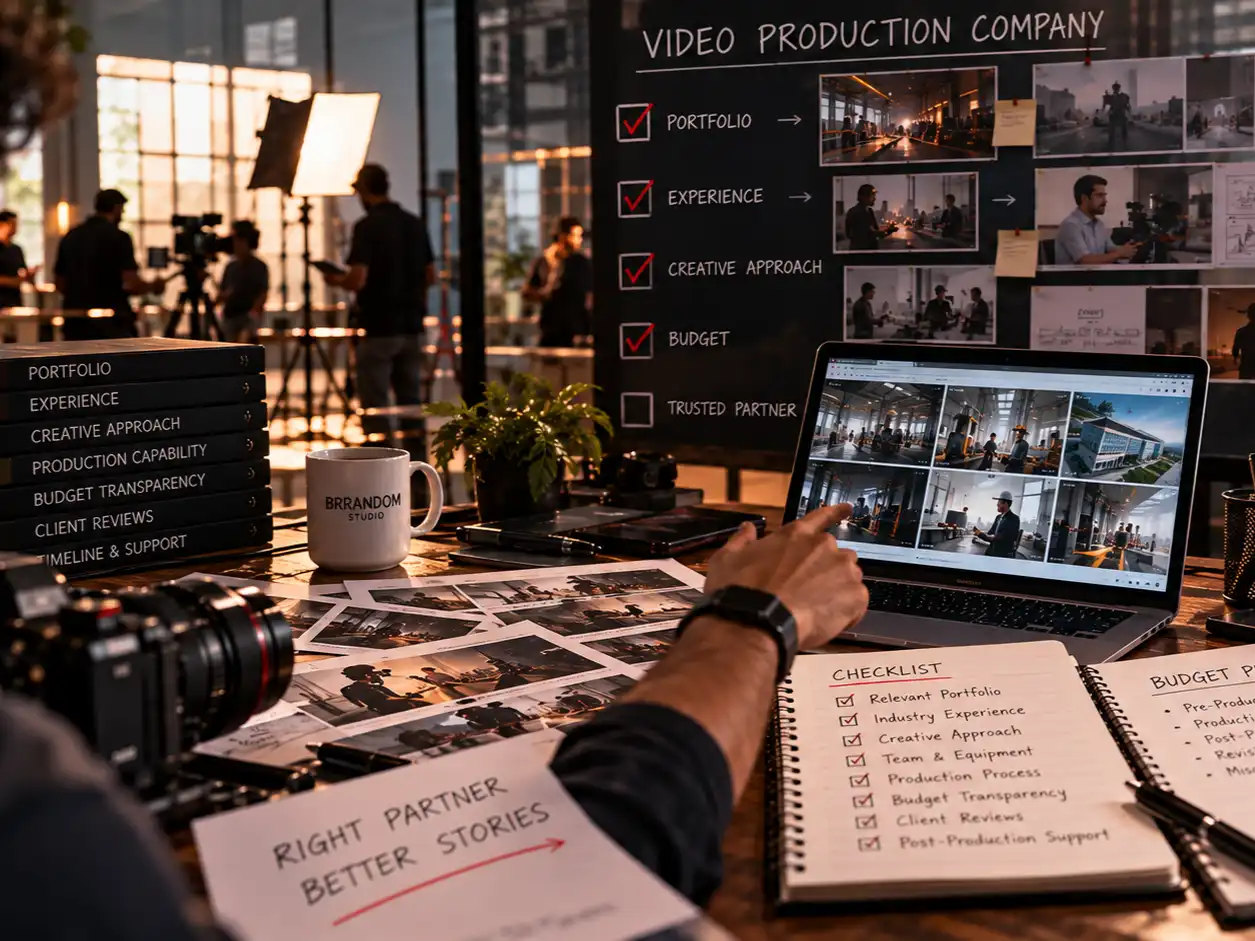
- I’ve watched 2-3 full projects, not just a showreel
- I have an itemised quote, not a single lump number
- I know exactly who’s directing, shooting, and editing my film
- I know how many revision rounds are included
- I’ve asked how they handle scope changes mid-project
- The quote isn’t dramatically lower than every other quote I’ve received
If you can check every box, you’ve likely found a partner worth working with – regardless of which studio it turns out to be.
Want a second opinion on a quote you’ve already received?
If you’ve got a brief out to a few studios and want an honest read on whether a quote looks fair, or you’re starting from scratch and want a scoped estimate for your project, we’re happy to have that conversation – no pressure, no obligation.
Get a free consultation with Brrandom Studio →
FAQs
No. The lowest quote is often the result of cutting a dedicated director, reducing shoot days, or hiring less experienced crew – all of which affect the final film. Compare what’s included in each quote, not just the total.
An agency typically manages strategy and client relationships but often outsources actual production to third-party vendors. A production studio usually has an in-house team handling the entire process from script to final edit, which can mean tighter quality control and fewer handoffs.
Three is a reasonable number – enough to compare pricing and approach without dragging the decision out for weeks. Make sure each quote is scoped to the same brief so the comparison is fair.
Some change is normal if the scope changes (extra shoot days, additional cuts, new locations). What’s not normal is unexplained cost increases for things that should have been included from the start, like standard colour grading or a single revision round.
Ask for examples of past work in your industry or a comparable one, and pay attention to whether they understood the audience and tone needed – a hospital film and a steel-industry film require very different storytelling instincts, even if the production process looks similar on paper.
Recent Blogs