
Role of AI in Shaping the Future of Visual Storytelling
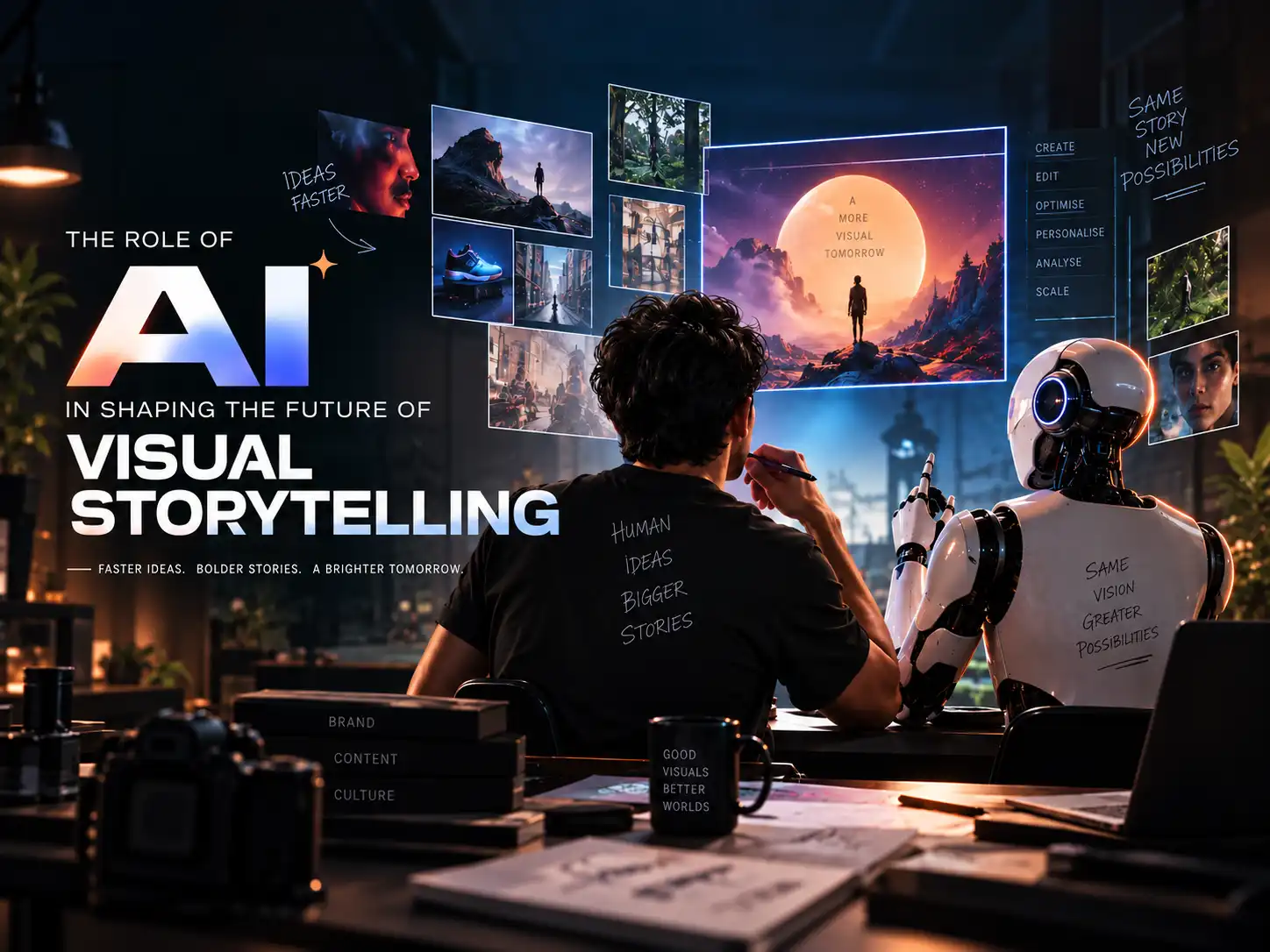
Visual storytelling has always played a powerful role in the way people connect, communicate and remember experiences. Strong visuals have the ability to influence emotions and shape perception instantly. Audiences are consuming content across multiple platforms everyday and brands are expected to deliver visually engaging experiences at a much faster pace than in previous years.
This growing demand has accelerated the use of AI in visual storytelling, transforming the way creative content is planned, produced and distributed. As digital storytelling continues to evolve, understanding the role of AI has become essential for creators, marketers and businesses looking to stay relevant in an increasingly visual world.
How AI is Reshaping Visual Branding Campaigns
The role of AI in marketing and content creation is no longer limited to automation. It is influencing how brands communicate visually, emotionally and strategically with their audiences.
-
1. Personalised Storytelling at Scale
One of the most significant advantages of AI in visual storytelling is its ability to personalise content for different audience groups. AI tools can analyse user behaviour, demographics and engagement patterns to help brands create tailored visual experiences. Instead of relying on one broad campaign for everyone, brands can now adapt visuals, messaging and even video structures for specific audiences. This level of personalisation helps content feel more relevant and engaging.
-
2. Faster Creative Development and Ideation
Faster Creative Development and Ideation
Creative ideation has traditionally been a time-intensive process involving brainstorming sessions, trend analysis and concept refinement. AI tools are helping speed up this process by generating ideas, suggesting creative directions and analysing audience preferences within minutes. AI-generated references, script suggestions and mood boards provide a structured starting point for creative development. This allows teams to spend less time on repetitive groundwork and more time refining narratives, improving visual quality and strengthening storytelling impact. -
3. Smarter Editing and Visual Enhancement
Smarter Editing and Visual Enhancement
Post-production is one of the areas where AI has made a particularly noticeable impact. AI-powered editing tools can now automate tasks like scene selection, subtitle generation, colour balancing and audio correction with impressive accuracy. These systems significantly reduce editing timelines while maintaining professional production standards. AI can also optimise content for different platforms by automatically adjusting formats, pacing and dimensions. This is especially valuable for brands producing high volumes of content across social media, websites and digital campaigns. -
4. Real-Time Audience Insights and Campaign Optimisation
One of the biggest strengths of AI in visual storytelling is its ability to provide immediate feedback on content performance. AI tools analyse metrics like watch time, engagement rates and audience retention, helping brands understand how viewers interact with their content. These insights make storytelling more responsive and adaptable. Instead of waiting until the end of a campaign to evaluate results, brands can refine visuals, messaging and distribution strategies in real time.
-
5. AI-Generated Visuals and Creative Experimentation
AI-generated visuals are becoming increasingly sophisticated and are opening up new possibilities for creative experimentation. From digital backgrounds and animated graphics to concept visualisation and AI-assisted image generation, creators now have access to tools that can support rapid design exploration. Concepts can be tested quickly, variations can be created efficiently and visual ideas can be refined before full production begins. This flexibility encourages innovation and supports more dynamic storytelling approaches.
What Are the Key Benefits of AI in Visual Storytelling?
The growing adoption of AI in visual storytelling is driven by the balance it creates between creative flexibility and operational efficiency. The key benefits of AI in visual storytelling include:
- Greater efficiency: AI automates repetitive tasks and speeds up production workflows.
- Improved personalisation: Content can be tailored for specific audience segments more effectively.
- Data-backed storytelling: Audience insights help creators make stronger creative decisions.
- Cost optimisation: Automation reduces production time and operational expenses.
- Scalable content creation: Brands can produce more visual content without significantly increasing resources.
- Enhanced brand consistency: AI tools help maintain a unified visual identity across platforms.
These advantages explain why AI Reshaping Visual Branding Campaigns has become such an important conversation in modern marketing and content strategy.
Conclusion
The role of AI in shaping the future of AI visual storytelling is becoming more significant with each passing year. From faster production workflows and intelligent editing to personalised experiences and data-driven insights, AI is transforming how visual narratives are created and shared. As the digital landscape continues to evolve, businesses that adopt AI thoughtfully will be better positioned to create compelling visual experiences that resonate with audiences. The future of visual storytelling is not only more intelligent but more collaborative, adaptable and creatively empowered.
FAQs
AI visual storytelling involves using artificial intelligence tools to support and enhance the creation of visual narratives.
AI assists with scripting, editing, optimisation, analytics and audience targeting during the AI in content creation process.
No. AI supports production workflows, but creative direction and emotional storytelling remain human-driven.
AI improves efficiency, scalability, audience targeting and content personalisation while helping reduce production time and costs.
Recent Blogs